
























As Silencers Become Mainstream, States Reform Laws
By Dean Weingarten. May 13, 2026
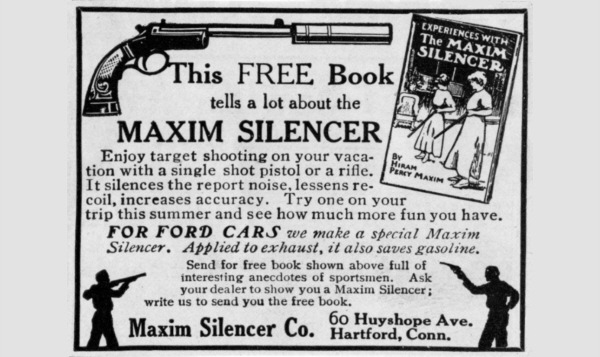
In 1934, the National Firearms Act (NFA) was passed by Congress. The bill which became law was a consolation prize for the Franklin Delano Roosevelt (FDR) administration. The primary purpose of licensing and registration of all handguns had been stripped from the bill because of lobbying by the NRA and Second Amendment supporters. One of the items left in the bill was an absurdly high tax on silencers/suppressors. The $200 tax was the equivalent of five months wages for a person earning minimum wage.
Silencers had never been involved much in crime. No serious reason is included in legislative history for the inclusion of silencers in the NFA. Their ban was part of the hysteria of the time. The new Attorney General, Homer Cummings, conflated guns and crime. The NFA was his grab for power within the FDR administration.
In 1934, when what was left of the National Firearms Act made silencers unaffordable except for the very rich, the law was relatively limited. It only applied to silencers which had crossed state lines. If you made your own silencer, it was not involved in interstate commerce, so the federal law did not apply. It was the middle of the depression, and people were too concerned with having enough to eat and a roof over their heads to be worried about a silly new federal law.
All of that changed over the next 50 years. The Interstate Commerce clause and the National Firearms Act of 1934 were expanded far, far beyond what had been the original boundaries. Short barreled rifles came to include pistols with shoulder stocks. Short barreled shotguns came to include revolvers with shot cartridges and a smooth bore. The Interstate commerce clause came to include almost everything. Bureaucracies came to be the dominant ruling force in most people's lives.
…